Acceleration

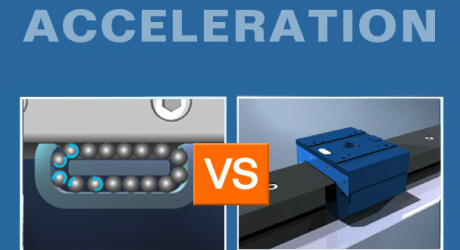
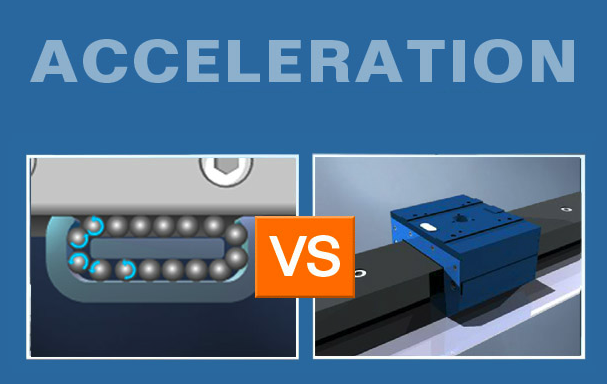
Conventional rolling element bearings are limited in their acceleration capabilities because of the rotating inertia of the balls in their guideways. These balls start and stop at inconsistent points.
They slide, skip and skid. This causes precision problems, especially for applications with light loads over short distances.

In a direct comparison, porous media air bearings are not hindered by internal inertia in different directions. There are no balls to slip and slide. So acceleration capabilities are high and consistent regardless of distance or load.
Technology Comparisons

Because of their non-contact nature, porous media air bearings provide advantages that traditional rolling element bearings, or even conventional orifice air bearings, inherently cannot. Here you’ll find the performance of porous media air bearings compared to that of conventional rolling element bearings across eight critical characteristics.

Positioning

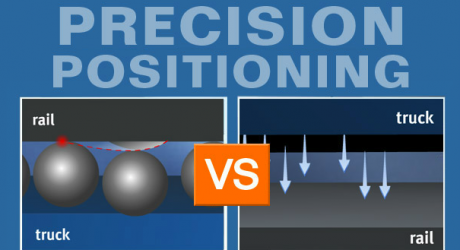
When your application requires precision positioning, it is important to understand that rails and guideways often exhibit flatness deviations. Some of these are inherent…others may develop over time. Either way,…

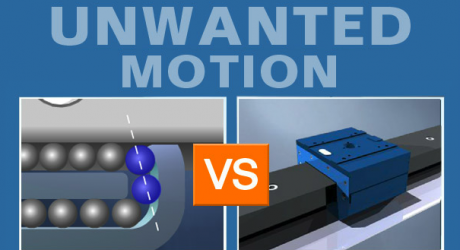
Unwanted Motion

A direct comparison of porous media air bearings and conventional rolling element bearings shows that, when using the latter, there is a significant amount of unwanted motion in all directions….

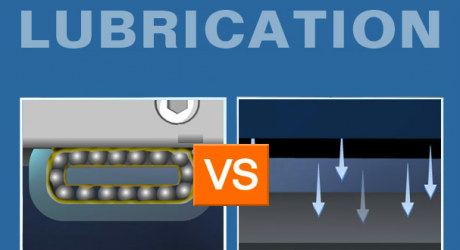
No Lubrication

Mechanical contact requires lubrication. Because conventional rolling element bearings rely on the movement of balls against a guide surface, lubrication is a standard part of ongoing equipment maintenance. But lubricant…

Acceleration

Conventional rolling element bearings are limited in their acceleration capabilities because of the rotating inertia of the balls in their guideways. These balls start and stop at inconsistent points. They…

Speed

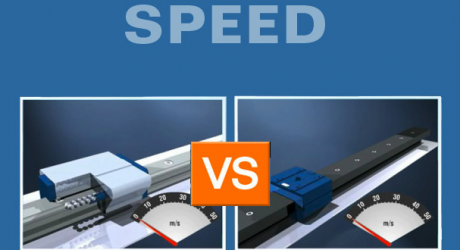
There is an order of magnitude difference which separates the speed capabilities of conventional rolling element bearings from their porous media air bearing counterparts. Contact with the rail or guideway,…

Smooth and Silent Motion

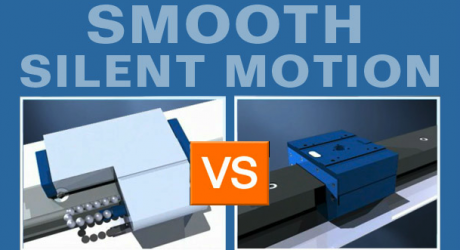
Any comparison with porous media air bearings must include a recognition of the constantly changing, multiple forces which act on the raceway integral to the function of the competitive rolling…

Zero Wear

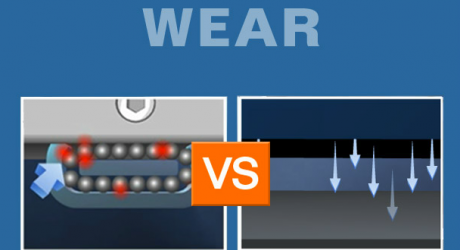
When it comes to wear, contact is, again, the differentiating factor between rolling element bearings and porous media air bearings. Quite simply, balls show wear from mechanical contact. Over their…

Zero Friction

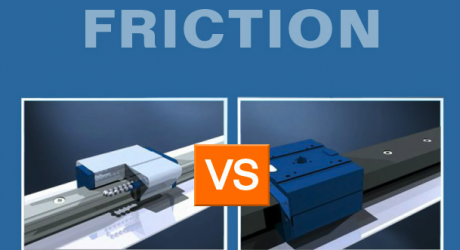
The comparison between conventional rolling element bearings and porous media air bearings begins and ends with contact. Contact, and the resulting high stiction, often causes the rolling element bearing to…